
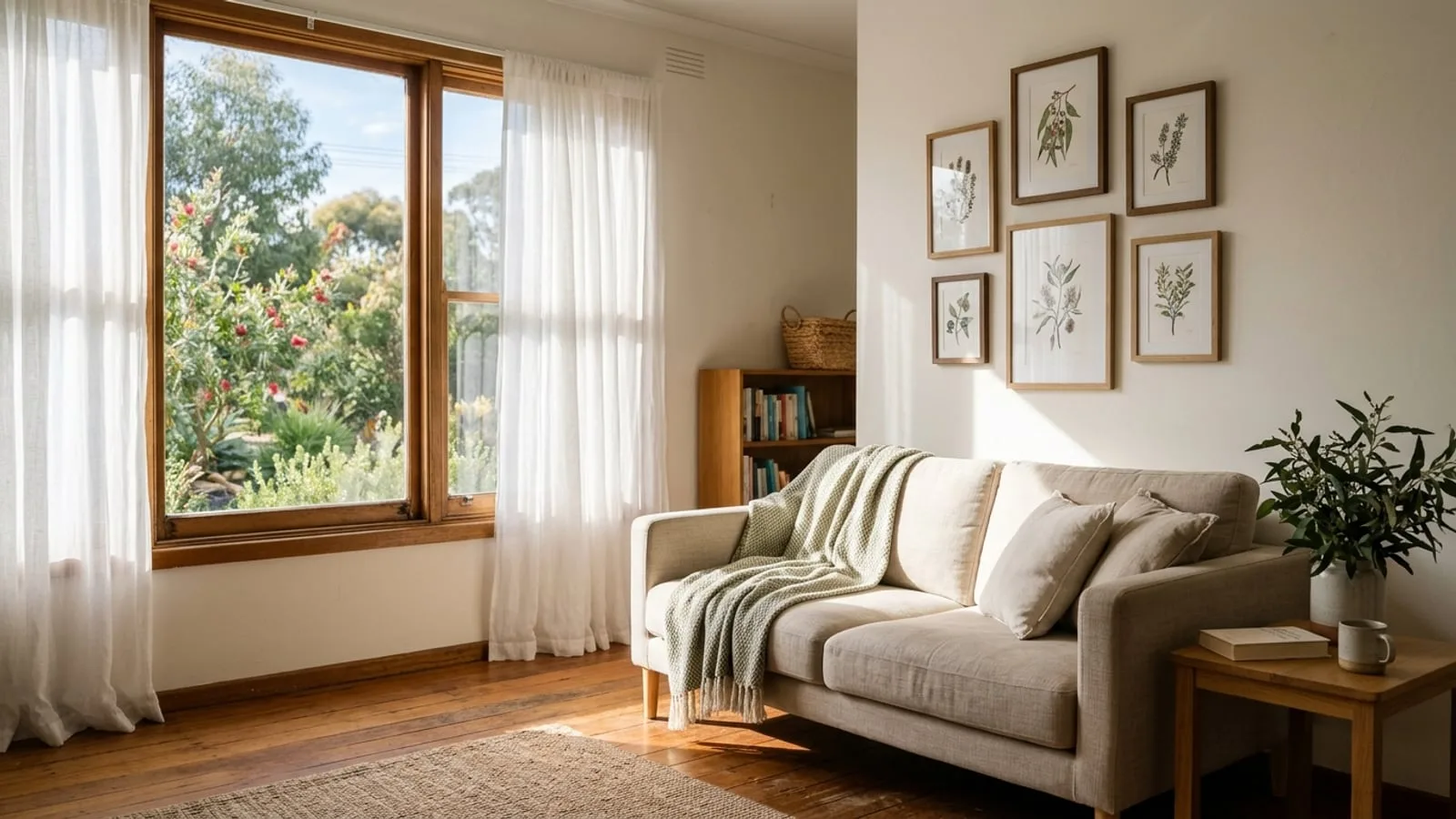
The most reliable way to protect art from sunlight is to hang it where direct sun never reaches it, and to save the brightest walls for pieces that matter least. Light damage builds up over time, so a print that catches a patch of sun every afternoon keeps fading for as long as it hangs there.
Spring is a good time to check. The days are getting longer and the sun’s path is shifting, so a wall that sat in shade through winter can start catching direct light, and the reverse can happen too.
Why sunlight fades art and photographs
Light fades colour and speeds up the deterioration of paper and photographs, and its effect adds up with every hour of exposure. In its guide to caring for paper collections, the State Library of Queensland lists long-term light exposure among the causes of damage and describes light damage as cumulative. The State Library of NSW warns that strong light and direct sunlight accelerate deterioration and fading.
Direct sun brings heat as well. A frame in a sunny patch warms up every afternoon and cools again at night, and the State Library of Queensland names fluctuating temperature and relative humidity as another cause of damage.
Fading is slow, so it is easy to miss. If you take a print out of its frame for any reason, compare the strip that sat under the mat or the frame edge with the exposed area. A visible difference means light has been at work, and the piece needs a darker spot.
A piece that has already faded should come out of the light first, because further exposure only adds to the damage. For a valuable work, ask a conservator for advice before trying any cleaning or treatment yourself.
Which artworks need the most protection
Works on paper sit at the top of the list. The State Library of Queensland includes prints, watercolours, charcoal, pastels, pen and ink and pencil drawings among paper-based collections, and its advice to limit light exposure applies to all of them.
Photographs need the same care. The State Library of NSW’s advice on caring for photographs says colour photographs, including digital prints, are especially vulnerable to light damage and fading, and that older processes such as albumen prints are extremely light-sensitive. For an irreplaceable family photo, it suggests displaying a copy rather than the original.
If you are not sure what a piece is made of, treat it as sensitive. Posters, art prints and photographs are usually on paper of some kind, so the same care applies to the print from a gallery shop and the one passed down through the family.
Find the sunny walls in your home
Australian design guidance works with the sun to the north. NSW’s BASIX design principles, for example, recommend locating living areas to the north with north-facing windows for passive heating, and reducing windows on the east, west and northwest to keep homes cooler.
That means the rooms built to catch the sun are often the ones where art hangs. East-facing windows bring in morning sun and west-facing windows bring in afternoon sun, and when the sun is low either can throw a beam deep across a room onto the opposite wall.
Reflected light counts too. A pale tiled floor or a white wall opposite a window can bounce strong light onto a piece that never sits in a direct sunbeam, so look at how bright each wall gets as well as where the sun lands.
The first step to protect art from sunlight is simply to watch. On a clear day, note where patches of direct sun land on your walls at breakfast, midday and late afternoon, then check again in a month or so as the season moves on.
Walls to avoid even without direct sun
Choosing a shaded wall is the best way to protect art from sunlight, but sunlight is not the only risk. The State Library of NSW advises keeping photographs off bathroom, kitchen, laundry and external walls, because humidity in those areas fluctuates and can cause distortion, and away from heaters, fireplaces and other sources of heat.
The State Library of Queensland gives similar advice for paper items, suggesting displays away from outside walls in a room away from moisture, heat and direct light. If the only free wall in a sunny room is an external one, save it for something you would not mind fading, such as a poster you can replace.
Keep art out of the direct airflow from heaters and air conditioners as well. Both can swing the temperature and humidity around a frame quickly, which is the kind of fluctuation the State Library of Queensland warns about.
Ways to protect art from sunlight without moving it
Curtains and blinds are the first tool, and the State Library of Queensland recommends them for reducing light levels. Drawing them during the hours a wall gets direct sun makes a real difference on bright spring and summer afternoons.
Glazing helps as well. The State Library of NSW suggests ultraviolet filtering glass or acrylic to reduce the impact of light damage, and making sure a photograph never touches the glass. Treat it as one layer of protection, not a reason to hang a precious print in full sun.
Rotation is another option. Swap light-sensitive works between a bright wall and a dim hallway from time to time, or rest them in storage for a while, and our guide on how to store art covers looking after pieces while they are off the wall. For picture lights and lamps near photographs, the State Library of NSW recommends low ultraviolet bulbs.
Getting placement advice for a sunny room
When we hang art, we look at the furniture, the layout of the room and the lighting before suggesting where each piece should go. If a sunny living room has you unsure where to start, book a visit through our picture hanging service before summer arrives.